Dust and Discovery: The Quiet Crusade to Rescue America's Lost Poems from Oblivion
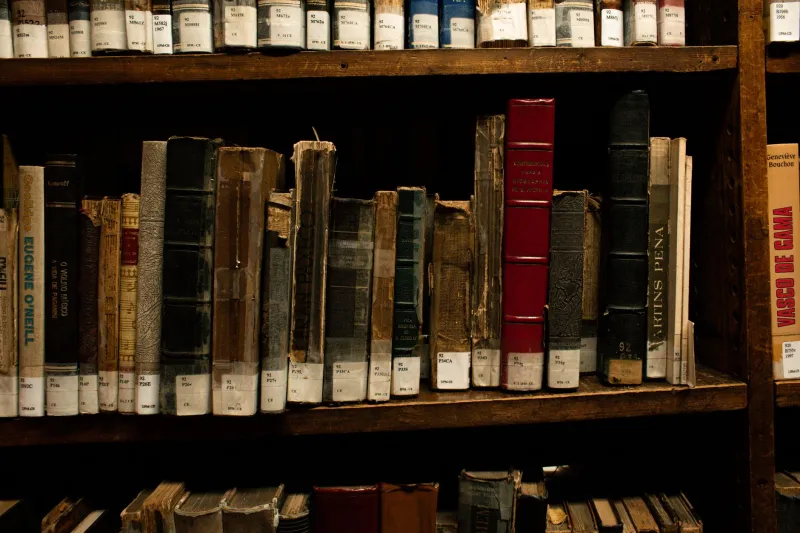
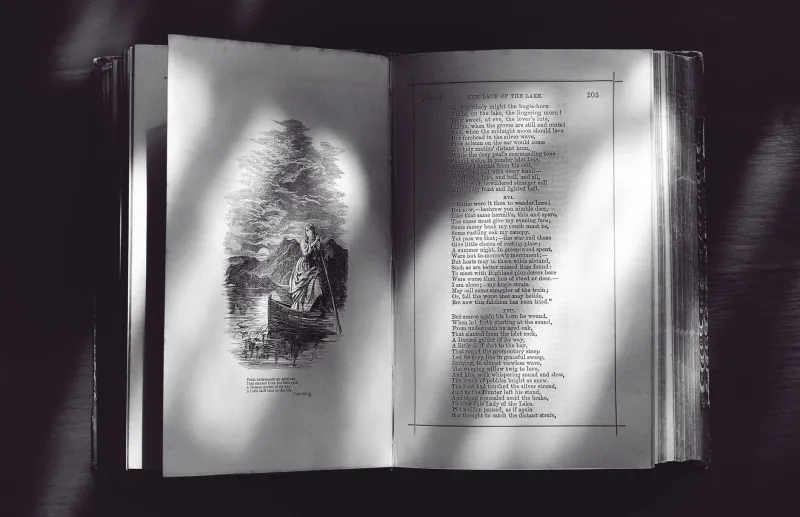
There is a particular kind of silence that settles over a poem no one has read in decades. It gathers in the folds of yellowed paper, in the ink that has faded to the color of old tea, in the handwriting that no living person can immediately identify. Across the United States, thousands of such poems exist in this suspended state — not destroyed, not celebrated, simply waiting. And in recent years, a quiet but determined community of literary detectives has begun listening for them.
From the regional archives of small-town libraries in Appalachia to the overstuffed estate sales of New England farmhouses, American poetic history is far richer — and far more fractured — than any single anthology could suggest. The canon we teach in schools and celebrate in prize ceremonies represents only a narrow corridor of a much larger house. The rooms beyond that corridor, it turns out, are full.
The Art of the Literary Find
Susan Herrick, a retired librarian in Asheville, North Carolina, describes the experience of discovering an unknown manuscript as something close to sacred. Several years ago, while cataloging a donation of boxes from a local estate, she came across a handmade pamphlet of poems written by a woman named Della Marsh, who had lived in the region during the 1930s and 1940s. The poems were spare, precise, and startlingly modern in their attention to the natural world and to female labor.
"I kept thinking, who was this woman?" Herrick recalls. "The poems had this authority to them. They weren't amateur work. Someone had worked very hard on these lines, and then they simply vanished."
Herrick's subsequent research revealed that Marsh had submitted poems to several regional publications during her lifetime, receiving modest recognition. After her death, with no children and no literary executor, her work dispersed with her belongings. What survived did so by chance.
Stories like Marsh's are not exceptional. They are, archivists insist, entirely ordinary — which is precisely what makes the work of recovery so urgent.
Why Voices Disappear
The disappearance of a poet from public consciousness rarely results from a single dramatic event. More often, it is the cumulative effect of structural inequities, geographic marginalization, and the gatekeeping tendencies of mainstream literary culture.
Poets who worked outside major urban centers — New York, Chicago, San Francisco — have historically faced steeper obstacles to publication and preservation. Women poets, poets of color, and those writing in regional dialects or from working-class perspectives were frequently excluded from the networks that sustained literary reputations across generations. Without advocates in academia or publishing, their work had no institutional mechanism to carry it forward.
Dr. Marcus Webb, a literary historian at a mid-sized university in the Midwest, has spent much of his career examining what he calls "the infrastructure of forgetting." His research focuses on African American poets of the early twentieth century whose work appeared in community newspapers, church bulletins, and locally printed pamphlets — publications that were never systematically preserved by major institutions.
"The Library of Congress has extraordinary holdings," Webb notes, "but the poem that appeared in a Black church newsletter in Birmingham in 1922 was not considered worth saving by the institutions that controlled preservation. Those decisions had consequences. We are still living inside them."
The Archivists and Their Craft
Against this backdrop of structural loss, a network of dedicated individuals is working to reverse — or at least slow — the erosion. Their methods are as varied as the collections they tend.
Some operate within formal institutions. The Bancroft Library at the University of California, Berkeley, and the Beinecke Rare Book and Manuscript Library at Yale maintain significant poetry archives, and both have expanded their acquisition efforts in recent decades to include more diverse voices. Smaller regional institutions have followed suit, often with fewer resources but no less commitment.
Others work independently. Collectors who haunt estate sales, used bookshops, and online auction platforms form an informal but surprisingly effective network of recovery. Many share their finds through social media, creating digital communities organized around the pleasure and purpose of literary excavation.
Amanda Forsythe, a collector based in Portland, Oregon, has amassed a personal archive of more than four hundred chapbooks and self-published poetry collections dating from the 1890s to the 1980s. Her collection leans heavily toward women writers and writers from the Pacific Northwest. She photographs each acquisition and posts detailed descriptions online, where followers — including researchers, librarians, and other collectors — occasionally help identify authors or supply biographical context.
"I think of it as a conversation across time," Forsythe says. "These poets were speaking. They just needed someone to pick up the other end of the line."
What Recovery Reveals
The poems that emerge from archives and attics do more than fill biographical gaps. They reshape the literary landscape itself, offering perspectives that complicate and enrich our understanding of American poetic history.
Consider the body of work being recovered from the Federal Writers' Project of the 1930s, a New Deal initiative that employed thousands of writers, including many poets, to document American life. While the project's prose output has received considerable scholarly attention, its poetry — often written by individuals with no prior publication history — remains largely unexamined. Researchers who have begun working through these materials describe encountering voices of remarkable originality, poets who were writing about labor, displacement, and community with a directness that feels urgently contemporary.
The implications extend beyond historical curiosity. When lost poems are brought back into circulation — through scholarly editions, digital archives, literary journals, or public readings — they become available to new readers who may find in them reflections of their own experiences. A poem about grief or displacement or the texture of rural life does not expire. It waits.
The Digital Frontier
Technology has accelerated the work of recovery in ways that would have seemed improbable even twenty years ago. Digitization projects at libraries nationwide are making previously inaccessible materials available to researchers anywhere in the world. Optical character recognition software, though imperfect, can process handwritten manuscripts at speeds no human reader could match. Online databases allow scholars to cross-reference names, dates, and publication histories across vast collections simultaneously.
Yet technology also introduces new challenges. The sheer volume of material being digitized can be overwhelming, and without careful curatorial attention, newly accessible poems risk simply migrating from physical obscurity to digital obscurity. Discoverability requires more than digitization; it requires the kind of thoughtful contextualization that only human expertise can provide.
This is why archivists like Herrick and researchers like Webb argue that the work of recovery is ultimately a human endeavor — one that demands patience, curiosity, and a genuine belief that every voice that took the trouble to find its form in verse deserves the chance to be heard.
A Living Inheritance
The poets gathering dust in America's attics and archives were not failures. They were people who found language insufficient for silence and turned to verse. That their work did not reach the audiences it deserved reflects more about the systems surrounding literature than about the literature itself.
The quiet crusade to recover these poems is, in its own way, an act of faith — faith that words matter, that voices accumulate, and that the literary inheritance of this country is larger, stranger, and more beautiful than any single shelf could hold. For those willing to look, the discovery is always waiting. It smells faintly of old paper, and it begins with a single line no one has read in years.