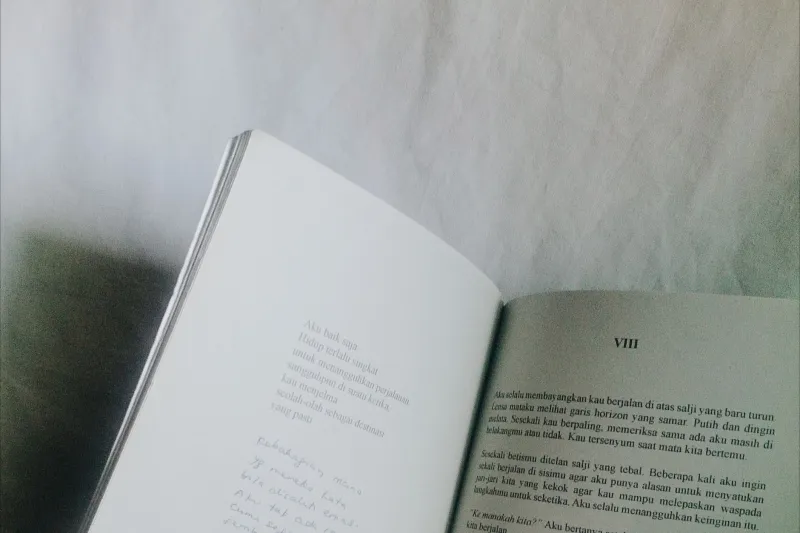
The Body Speaks: How Contemporary American Poets Are Writing Verse That Moves
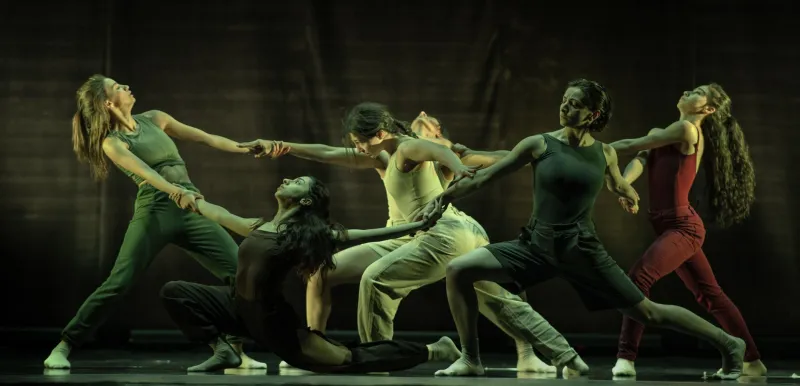
Poetry has always lived in the body. Long before it was written down, verse was chanted, sung, and performed — rhythms held in the chest, breath shaping sound into meaning. Yet somewhere in the long journey from oral tradition to printed page, the body was asked to step aside. For much of the modern era, the dominant image of the poet has been sedentary: a figure bent over a desk, working in stillness and solitude.
That image is being actively dismantled. Across the United States, a growing community of poets is reclaiming the physical dimension of language — collaborating with dancers, incorporating movement into their own live readings, and writing work that is explicitly designed to be experienced through the body rather than consumed through the eye alone. The results are challenging, exhilarating, and, for many participants, deeply restorative.
When Language Learns to Move
The collaboration between poetry and dance is not new. Poets from Walt Whitman to Sonia Sanchez have written with a keen awareness of the body's rhythms, and the relationship between verse and movement has been explored throughout the twentieth century in experimental performance spaces from Black Mountain College to downtown Manhattan lofts. What distinguishes the current moment is both its breadth and its intentionality.
Contemporary poets are not simply reading their work while dancers perform alongside them. They are entering into genuine creative dialogues with movement artists, allowing the demands and discoveries of choreography to reshape the poems themselves. The process is reciprocal and often transformative.
Rachel Osei, a poet based in Atlanta, Georgia, began working with a local contemporary dance company three years ago after attending a performance that left her feeling that something language alone could not provide had just occurred in the room. "There was a gesture the lead dancer made — just a turn of the wrist — that communicated grief in a way I had been trying to write for months," she recalls. "I thought, what would happen if I stopped trying to own that and started trying to listen to it?"
The collaboration that followed produced a performance work in which Osei's poems were not recited as finished texts but rather spoken in fragments, their timing and emphasis shaped by the movements happening simultaneously on stage. Audience members reported that the experience of hearing a line while watching a body respond to it created a kind of double meaning — emotional resonance that neither art form could have generated independently.
The Language of the Body
For many poets engaged in this work, the turn toward movement is connected to a broader inquiry into what language can and cannot do. Words, for all their power, operate at a certain remove from direct physical experience. They describe, evoke, and suggest — but they do not replicate the sensation of a muscle releasing or the weight of a breath held too long.
Dance, by contrast, operates entirely within the body. It makes no claim to representation; it simply is. When poets and movement artists work together, they are negotiating across this fundamental difference, finding the places where language and physicality can illuminate each other without either absorbing the other.
Daniel Reyes, a choreographer in Chicago who has collaborated with multiple poets over the past decade, describes the process as one of mutual translation. "Poets come to me with words that have very specific textures — heavy, sharp, slow. My job is to find movement that has the same texture, not movement that illustrates the words. There's a difference. Illustration is redundant. Texture is conversation."
Reyes notes that the poets he works with most productively are those willing to let the movement change the poem. A line that seemed complete on the page may reveal, in the context of a body moving through space, that it is carrying too much or not enough. The choreographic process becomes a form of editorial feedback that operates below the level of conscious linguistic analysis.
Movement as Creative Practice
Beyond formal collaboration, many poets are incorporating movement into their individual creative practices — not as performance but as a means of generating and refining verse.
The connection between physical activity and creative thought is well documented in cognitive science. Walking, in particular, has long been associated with heightened associative thinking, and numerous writers have described the ways in which movement unlocks mental states that sitting at a desk cannot access. For poets working with the body deliberately — through yoga, martial arts, somatic movement practices, or simply extended periods of walking in attentive silence — the relationship between physical sensation and linguistic discovery has become a central element of their craft.
Lorraine Chu, a poet and yoga instructor based in Seattle, Washington, teaches workshops in which participants are invited to move before they write, using the body's experience of a particular posture or sequence as the raw material for verse. The resulting poems, she observes, tend to be more concrete and more honest than those produced through purely intellectual effort.
"When you've just held a balance pose until your legs were shaking, you know something about endurance that you didn't know before," Chu explains. "And that knowledge is in your body, not in your head. The poems that come from that place have a different kind of authority."
This somatic approach to poetic composition aligns with a broader wellness-oriented understanding of creative practice — one that treats writing not as a purely mental activity but as an embodied process in which physical and psychological health are inextricably linked.
The Live Reading Reimagined
The traditional poetry reading — poet at podium, audience in chairs — is also undergoing revision in the hands of practitioners committed to embodied verse. Across the country, poets are experimenting with formats that ask both performers and audiences to engage physically with language.
Some readings now incorporate guided movement, inviting audiences to make small gestures or shift their weight in response to particular lines. Others take place in non-traditional spaces — parks, staircases, rooftops — where the environment itself becomes part of the reading's physical vocabulary. Still others involve the poet moving through the space during the performance, so that the audience's relationship to the speaker's body changes as the poem progresses.
These experiments are not universally embraced. Some poets and readers remain committed to the quiet concentration that the traditional reading format supports, arguing that the introduction of movement can distract from the language itself. The tension is generative rather than paralyzing — it reflects a field in genuine creative ferment.
What the Body Knows
At its deepest level, the movement toward embodied poetry is a claim about the nature of human experience. It insists that understanding is not only cognitive but physical — that we know things in our muscles and our breath that our minds have not yet found words for, and that poetry, at its most ambitious, should reach toward that wordless knowledge.
This is not a rejection of language but an expansion of what language is understood to encompass. The poem that moves — that inhabits a body, that breathes with a dancer, that asks a reader to feel rather than only to read — is not less a poem for its physicality. It is, perhaps, more fully itself.
For the poets, dancers, and audiences discovering this territory together, the experience carries a quality that many describe in terms that echo the language of wellness and renewal: a sense of coming home to something that was always present but rarely acknowledged. The body, it turns out, has been waiting to speak. Poetry, at its best, has always been listening.